
Guide · On the water
River safety for kids
Rowing with kids is one of the best experiences the Delta has to offer, as long as a few rules are followed. We have gathered them from the official recommendations of the Prefectura Naval Argentina, the country’s coast guard.
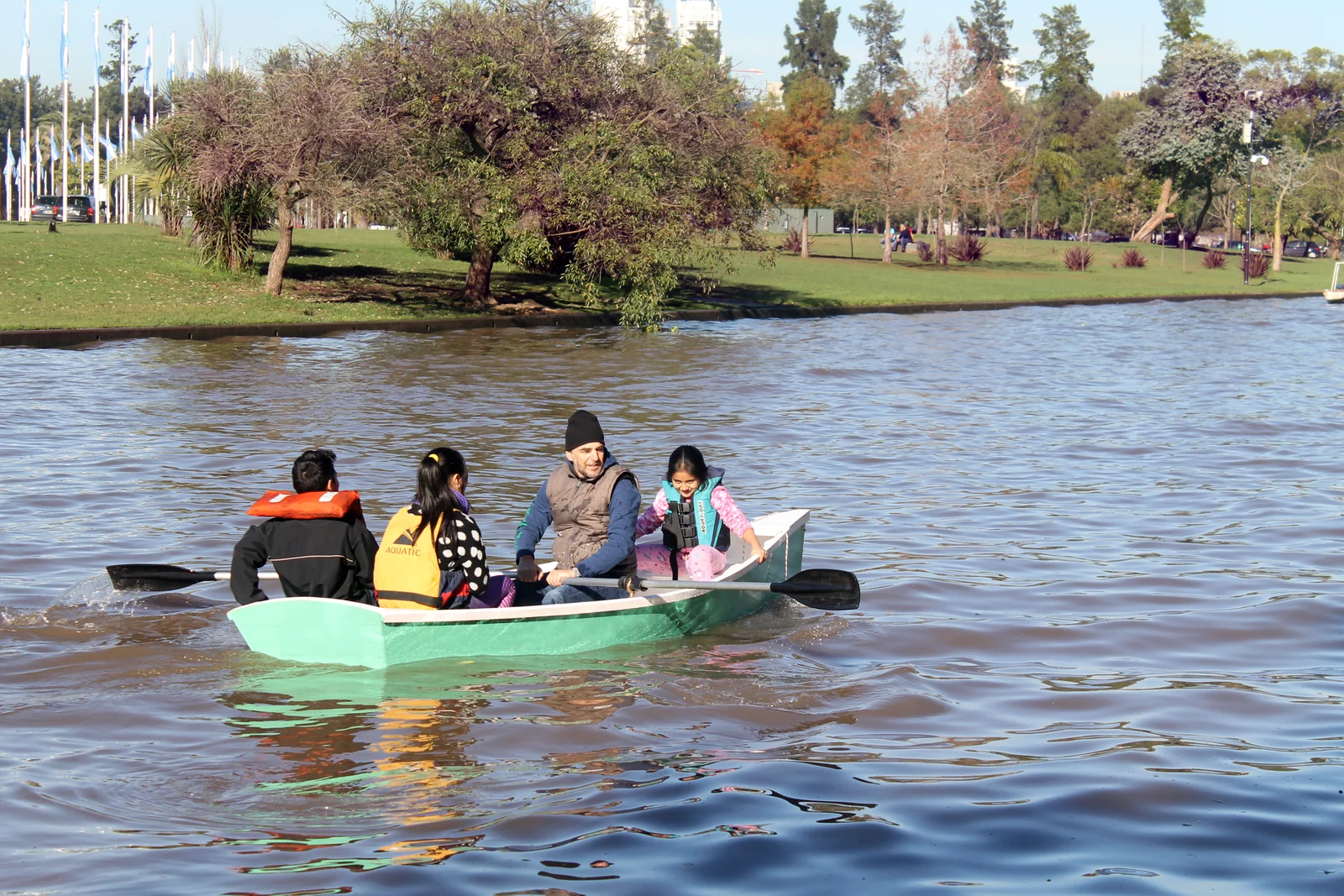
The essentials in 30 seconds
- Life jacket on and fastened, for everyone on board
- An adult on board under-18s go out accompanied
- Near the shore within 200 metres, away from motorboats
- Able to swim and never alone
- Check the forecast and tell someone where you’re going
- If you capsize stay with the boat
All of these rules come from the Prefectura Naval Argentina’s recommendations for kayaks and rowing boats (opens in a new tab) and for recreational boats (opens in a new tab) (in Spanish). If you row elsewhere, check your local authority’s rules too.
Before you go out
- Check the weather. The Prefectura asks you to review river and weather conditions and the forecast before setting off.
- Report your departure and return to your club or boat storage.
- Inspect the boat for leaks in the hull.
- Do not exceed the capacity stated by the manufacturer or the design. For a school-built boat, respect the capacity on the plans.
- Carry the kit: a strong bow line at least as long as the boat, a grab line around the boat, a bailer or bucket, a spare oar or paddle if possible, your phone in a waterproof bag within reach, and a white all-round light if you will be out at night.
Life jackets, no exceptions
In boats propelled only by oars or paddles, including kayaks and canoes, a life jacket or buoyancy aid is compulsory, together with a whistle attached to it. This is set out in Prefectura Ordinance 3/17, “Safety measures for rowing boats”, according to its recommendations page (opens in a new tab).
- For all recreational boats, the Prefectura asks for approved life jackets in good condition, one per person, and adds: pay special attention if you have children on board (source (opens in a new tab)).
- Choose bright colours: they make search and rescue easier if it is ever needed.
- The life jacket goes on, fastened, before anyone steps into the boat, not stowed under a seat.
Who goes on board
The Prefectura is clear: under-18s must be accompanied by adults. Whoever is in charge of a rowing boat should also have proper rowing technique, be able to swim and avoid going out alone.
In practice, with kids: one adult who can row in every boat, small groups and nobody on board without a life jacket. No one climbs onto the deck or the gunwale: everyone stays seated inside the boat.
Sharing the river with other boats
A rowing boat is the most vulnerable craft on the river. That is why the Prefectura recommends:
- Rowing well away from motorboats and within 200 metres of the shore.
- At crossings, always giving way to motorboats and making eye contact with the helmsman.
- Waiting for passenger launches to dock or leave, and never crossing their bow: from the helm they cannot see a small boat close by.
- Acting prudently, taking no unnecessary risks and knowing your own limits.
If the boat capsizes
The official advice for kayaks is never to abandon the craft, because it has reserve buoyancy. With a life jacket on, the safest thing is to hold on to the boat and attract attention with the whistle. That is why the whistle and bright colours matter: they help others see and hear you.
Practising in calm water with instructors, before heading out onto open river, helps nobody panic if it happens.
Checklist for an outing with kids
| Before you go, check | Why |
|---|---|
| One approved life jacket per person, worn, with a whistle | Compulsory in rowing boats (Ordinance 3/17) |
| An adult who can row in every boat | Under-18s must be accompanied |
| Forecast and river conditions | Reviewed before setting off |
| Departure reported to the club or boat storage | Someone knows where you are and when you will be back |
| Hull free of leaks, capacity respected | An overloaded or leaking boat is unstable |
| Bow line, grab line, bailer and phone in a waterproof bag | Recommended kit for rowing boats and kayaks |
| A route close to shore, away from motorboats | Within 200 metres, giving way to powered craft |
The Prefectura also lists a helmet, thermal protective clothing and a first-aid kit as optional equipment, and reminds skippers not to drink alcohol while in charge of a boat.
How we do it at Bote al Agua
For many kids in our workshops, the launch is the first time they have ever rowed (InfoBAN, 2021 (opens in a new tab)). So it is a day we prepare for: a finished boat, life jackets for everyone, adults on board and families watching from the bank. If you are organising a launch with your school, use this guide as a checklist and check with the local authority or rowing club.
For information only. This guide summarises public recommendations from the Prefectura Naval Argentina, checked on 11 October 2026. It is not legal advice and does not replace current regulations, the instructions of the authority in each place, or swimming and rowing lessons with qualified instructors.
Frequently asked questions
Are life jackets compulsory in a rowing boat in Argentina?
Yes. According to the Prefectura Naval Argentina, crews of boats propelled only by oars or paddles, including kayaks and canoes, must wear a life jacket or buoyancy aid and carry a whistle (Ordinance 3/17).
Can a child row alone?
No. The Prefectura states that under-18s must be accompanied by adults, and it advises everyone to avoid going out alone.
What should you do if the boat or kayak capsizes?
The Prefectura advises never to abandon the kayak, because it has reserve buoyancy: stay with the boat, keep your life jacket on and use your whistle to call for help.
Sources
Checked on 11 October 2026. All links go to the original publication.
- Prefectura Naval Argentina, “Recomendaciones para el navegante con kayaks y botes a remo” (opens in a new tab) (in Spanish).
- Prefectura Naval Argentina, “Recomendaciones para embarcaciones deportivas” (opens in a new tab) (in Spanish).
- InfoBAN, “Alumnos construyen un bote a través del proyecto de educación STEAM” (opens in a new tab), 25 November 2021 (in Spanish).
Planning a launch with your school?
In Bote al Agua’s workshops for schools, every boat ends up on the river. See how we work, from the scale model to the launch.